
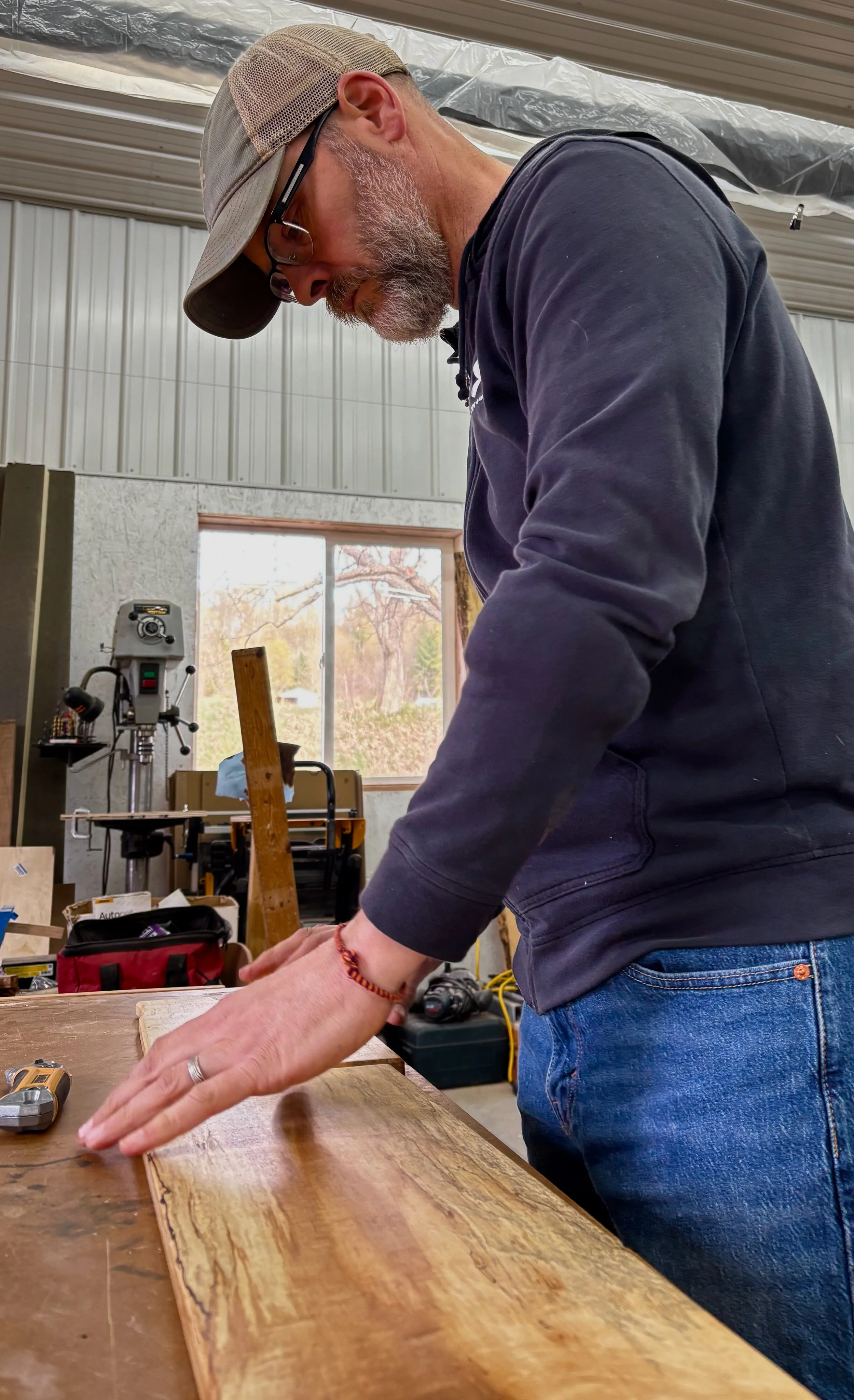
Tim Pierce, Craftsman at Hornbeam Craft
When I was a boy, I loved Legos™. I had a tub of them that was a collection of all of the kits I had gotten over the years. I would build each kit to instructions, but slowly the pieces and parts would make their way into the general bucket and other future constructions. The joy of pulling that tub out and having hundreds of blocks available for whatever I wanted to make was thrilling.
After earning a degree in software and spending some time writing code, I realized I wanted to make physical things in earnest, so I moved to Maine to build boats. While we used a bunch of epoxy and manufactured fibers, I mostly loved working with wood as a material. Thus, boats led to woodworking in general, which eventually led to cabinetry, furniture and housewares, in addition to finish carpentry. I was introduced to plastics and aluminum while running a CNC and laser for a sign-making company and could see their place, as well, in the items I wanted to construct.
I have the greatest feeling of hope and potential when surrounded by quantities of unique and diverse materials and a clear space to work with them. The material guides the design. I aim that what I make extends the existing feeling of a place and says “I’m a special part of all of this.” At the same time, it should bring joy in its harmonious and balanced use of pattern, texture, color, shape and proportion. Any surface where a finger might venture should be interesting to touch. Where a factory-made item might have dead flat and lifeless surfaces, I like to leave texture and judiciously uneven surfaces to create interest.
While I’m “materials-first”, the form of an object should complement its materials. Wood grain should enhance the design and not be distracting. Modern materials (plastics, heavy finishes, shiny metals, etc.) have their place sometimes, providing structure and interesting shapes, but I generally prefer to keep them in the background. More recognizable and restful natural materials (wood, masonry, steel, copper, etc.) should keep most of the focus. Reclaimed materials present a special challenge when used in a new project. They tend to require more time and patience to incorporate, but they also have more “story” than new materials. Man-made materials begin to take on a unique personality once they’ve been time-worn and survived to live on in another creation.
Equally, I appreciate restoring items that have already worked or been loved for a long time and need some sprucing up. These items deserve to be fixed or augmented before replacing them. They often can be given a new life, with some effort. It is very satisfying to make something “work” or fit again and to save it from the trash heap.
Whether I’m making something new or fixing an old favorite, I enjoy working through the process to achieve a unique and beautiful finished piece.
Please drop me a line to talk about your special project.
Tim Pierce, Craftsman